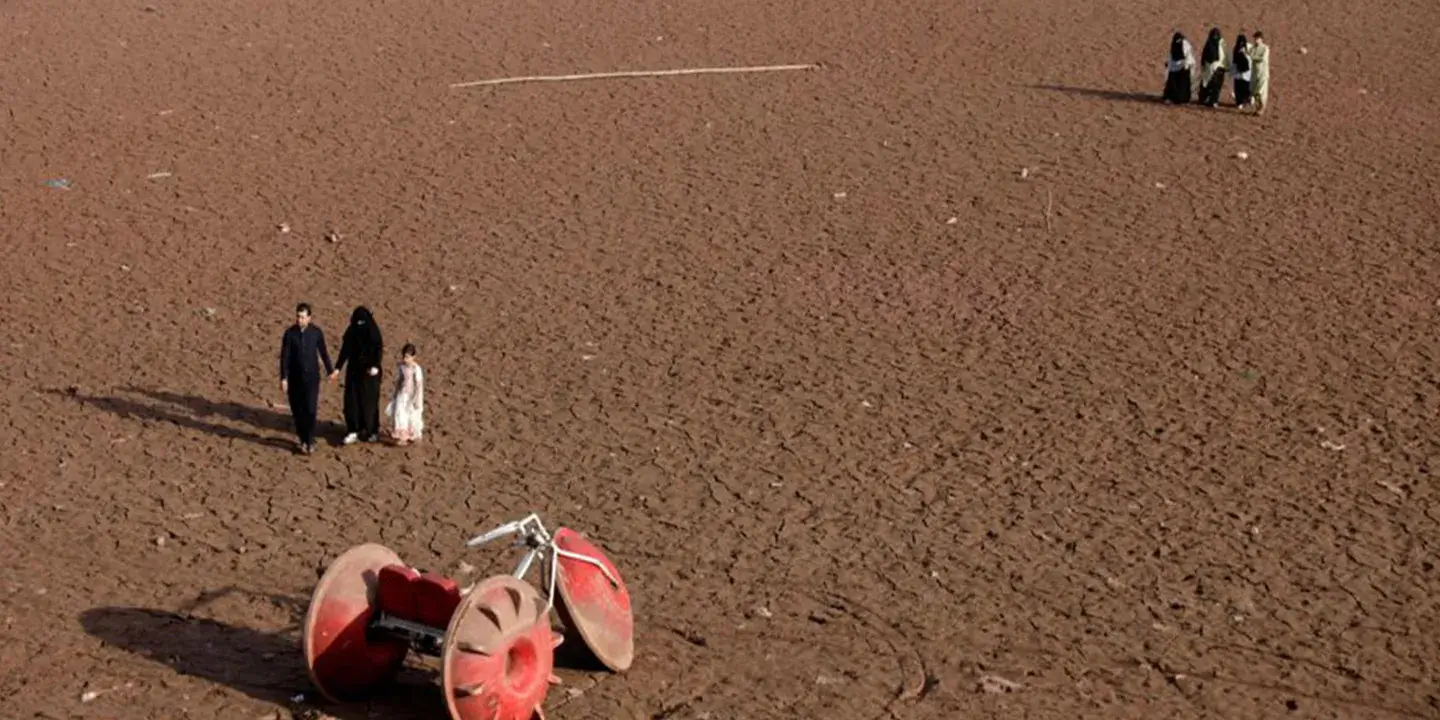


Balochistan [Pakistan], December 8 : Balochistan recorded 41.9pc below-normal rainfall in the period of the last three months, which has heightened drought threats in Quetta and six other districts according to a report by Dawn.
Citing a report issued by the Meteorological Department, Dawn said that the province received only 8.6 mm of rainfall in September, October and November, which is significantly lower than the normal 14.8 mm.
It also mentioned that the temperatures during this period remained 0.9°C above the average.
As per Dawn, the Met Office’s drought advisory (pre-alert) stated that from May to November, western and southwestern parts of Balochistan witnessed a decline in rainfall, along with a rise in the number of consecutive dry days.
According to the forecasts, it has been indicated that rainfall in the affected regions will remain below normal till February 2026, while temperatures higher than usual, thereby aggravating drought conditions in Quetta, Chagai, Gwadar, Kech, Kharan, Mastung, Nushki, Pishin, Panjgur, Qilla Abdullah and Washuk.
According to a UNDP report on Balochistan released in 2024, climate vulnerability is a pressing concern.
As per the report, droughts are a characteristic and recurrent climatic event in Balochistan.
“While the province has experienced several prolonged drought spells, the extended dry periods observed from 1995 to 2018 represent the most severe and protracted arid conditions. In January 2019, 1.8 million in Balochistan were impacted by moderate to severe droughts when annual precipitation dropped by 24.4 percent relative to the expected rainfall.”
The UNDP report noted that the droughts have led to a significant scarcity of water, profoundly affecting local livelihood activities and the environment.
“Regions notably impacted by recurring droughts include Kalat, Chagai, Naukundi, and Zhob within the province. Furthermore, the use of precipitation data to quantify meteorological droughts reveals that various areas of Balochistan experience short-term summer and winter droughts. North-western Balochistan frequently experiences moderate to severe winter droughts due to varying annual intensities of westerly disturbances, while summer droughts are linked to deficient monsoon precipitation, particularly common in north-eastern and eastern Balochistan”, it said.
Source: ANI News








© 2026 Digital Mitra. All Rights Reserved.| Website made with by Elance Softech